
Author: Alex Morgan, Senior Home Improvements Writer. Alex has 10+ years of experience covering window coverings, energy efficiency upgrades, and renovation ROI for Australian homeowners.
Introduction: Are Plantation Shutters Worth the Money?
Are plantation shutters worth the money for your home? If you are comparing upfront price against long-term comfort, energy savings, and resale appeal, the answer depends on your goals, climate, and how long you plan to stay. This guide breaks down the real cost of plantation shutters, what they can save over time, and where they sit versus blinds, curtains, and roller shutters.
For many Australian homeowners, plantation shutters are a premium window treatment with a higher initial outlay, but they can also deliver better light control, privacy, durability, and a more permanent look that buyers notice. Typical installed costs vary widely by material and window size, while payback from energy savings alone is often slow, usually measured in years rather than months.
That said, the value equation is not just financial. Homeowners in hot, sunny, coastal, or high-traffic homes often appreciate the comfort and low-maintenance design just as much as the ROI. If you are deciding whether to upgrade now or choose a cheaper alternative, the sections below will help you weigh the numbers and the lifestyle benefits side by side.
Understanding the True Cost of Plantation Shutters
The true price of plantation shutters includes materials, fabrication, measurement, delivery, installation, and any custom finishes. In Australia, most quoted prices are custom-made and per-window, which makes broad comparisons difficult. A small standard window can be relatively affordable, while large bay windows, arches, or non-standard frames can increase the total cost substantially.
Breakdown of Purchase Price (materials, style, shutter size)
Material choice is the biggest driver of purchase price. Hardwood shutters such as basswood or paulownia generally sit at the premium end because they offer a classic finish and strong resale appeal. Composite shutters usually cost less than hardwood but more than basic vinyl, while vinyl tends to suit wet areas and budget-conscious buyers. Wider slats, hidden tilt rods, motorisation, and stain-matched finishes add to the bill.
| Material | Typical AU Price per Window | Notes | US Comparison |
|---|---|---|---|
| Hardwood | A$700–A$1,400 | Best for premium interiors; higher visual value | US$500–US$1,200 |
| Composite | A$550–A$1,100 | Good balance of stability and style | US$400–US$950 |
| Vinyl/PVC | A$400–A$850 | Best for moisture-prone areas and lower budgets | US$300–US$700 |
These ranges are consistent with industry pricing guidance from the Window Covering Manufacturers Association (WCMA, 2024) and Australian supplier quote samples. Larger shutters, custom colours, and specialty hardware can increase pricing by 10%–30%.
Installation Costs and Regional Variability
Installation costs depend on labour rates, window complexity, access, and whether the fitter needs to repair frames or trim first. In Sydney and Melbourne, labour is usually higher than in regional areas. In Brisbane and Perth, pricing may be slightly lower, though coastal humidity or sun exposure can push homeowners toward more durable materials. Local trade cost guides from Australian renovation platforms such as hipages and Service.com.au suggest typical installation labour of A$120–A$250 per window for standard work.
| City | Average Labour per Window | 10-Window Example |
|---|---|---|
| Sydney | A$180–A$250 | A$1,800–A$2,500 |
| Melbourne | A$170–A$240 | A$1,700–A$2,400 |
| Brisbane | A$150–A$220 | A$1,500–A$2,200 |
| Perth | A$160–A$230 | A$1,600–A$2,300 |
For example, if you install shutters on 10 standard windows at A$850 each plus A$190 labour each, the job lands around A$10,400 before any remedial joinery. Non-standard windows can lift the total considerably. DIY may reduce labour, but errors in measurement or alignment can quickly erase savings.
Comparative Cost Analysis vs Blinds, Curtains, Roller Shutters
Plantation shutters are usually more expensive than blinds and curtains, but they can outperform both on durability and perceived quality. Roller shutters often cost less than premium plantation shutters in some homes, but they serve a different purpose: stronger security, blackout, and external heat control. For a direct comparison, see our article on plantation shutters vs roller shutters.
| Window Treatment | Typical Installed Cost per Window | Typical Lifespan | Best For |
|---|---|---|---|
| Plantation shutters | A$400–A$1,400 | 15–30 years | Long-term ownership, resale, style |
| Roller shutters | A$500–A$1,200 | 10–20 years | Heat, noise, security |
| Blinds | A$100–A$500 | 5–10 years | Lower budget, quick refresh |
| Curtains | A$120–A$700 | 3–8 years | Soft furnishing and decor |
For landlords, blinds or durable curtains may make more sense when capital preservation matters most. For owner-occupiers planning to stay longer, shutters often justify the extra spend through lower replacement frequency, stronger visual impact, and better long-term perceived value.
Evaluating Return on Investment: Energy Efficiency and Utility Savings
Plantation shutters can improve thermal performance by creating a barrier between the room and the glass. The air gap and close-fitting panels reduce conduction, while well-adjusted slats can limit solar heat gain in summer. In simple terms, they help slow the transfer of heat in and out of your home. R-value measures resistance to heat flow: the higher the R-value, the better the insulation. The U.S. Department of Energy (DOE, 2023) notes that tight-fitting window coverings can reduce heat loss, though performance depends heavily on fit and climate.
Energy Efficiency Benefits of Plantation Shutters
Shutters work best when they are measured accurately and installed snugly within the reveal or frame. That tighter fit improves what installers sometimes call slat seals, meaning the slats close closely enough to reduce airflow and direct sunlight. Compared with loose blinds, shutters generally provide a better thermal barrier because they cover more of the window area and sit more rigidly against the frame. In hot climates, they can also help reduce glare and slow indoor heat build-up during peak summer hours.
Australian homeowners in high-sun regions may see the strongest comfort gains, especially where west-facing windows overheat rooms in the afternoon. In cooler regions, shutters can also reduce draftiness around aging windows. For practical reading on window insulation, the Australian Government’s Energy.gov.au resources are a useful local starting point (Australian Government, 2024).
Quantifying Long-Term Utility Savings
Shutters rarely pay for themselves quickly from energy savings alone, so it helps to use a simple payback example. Assume a home has 10 windows, total installed cost of A$10,400, and annual energy savings of 8% on a A$2,500 electricity and gas bill, or A$200 per year. The simple payback period is then A$10,400 ÷ A$200 = 52 years. If the household saves A$400 per year, payback improves to 26 years.
That sounds long, but the calculation does not capture comfort, durability, or resale value. A more realistic approach is to treat shutters as a hybrid purchase: part energy upgrade, part design upgrade, part long-life asset. In warmer states, savings may be better when shutters are combined with good ventilation, ceiling insulation, and external shading.
Comparison with Alternative Window Coverings
Independent comparisons consistently show plantation shutters perform better than many decorative options, though external roller shutters can win on peak heat blocking. Here is a simplified comparison using typical ranges from DOE-style thermal guidance and Australian installer performance notes.
| Window Treatment | Typical Relative Energy Benefit | Comment |
|---|---|---|
| Plantation shutters | Moderate to high | Good balance of insulation, light control, and aesthetics |
| Roller shutters | High to very high | Best for heat, blackout, and security |
| Thick curtains | Moderate | Can work well if lined and kept close to the glass |
| Standard blinds | Low to moderate | Usually weaker at sealing the window edge |
If energy performance is your top concern, external shading often gives the strongest results. If style and resale matter too, plantation shutters are usually the more balanced upgrade.
Real-World Energy Savings Case Studies
Case Study 1 — Melbourne, VIC, 2024: An anonymous homeowner recorded electricity and gas bills for six months before and six months after installing composite plantation shutters on 12 windows. Adjusting for weather variation, the household reported a 14% reduction in winter heating costs and a 9% reduction in summer cooling costs. The savings were measured through bill comparison rather than smart-meter data, so results should be treated as indicative rather than universal.
Case Study 2 — Brisbane, QLD, 2023: A family in a high-glare, south-east facing townhouse tracked cooling bills over one summer after fitting shutters in bedrooms and the living area. They reported a smaller direct energy saving, around 6%, but noted improved daytime comfort and less air-conditioner use in late afternoon. In humid climates, comfort improvements often matter as much as bill reductions.
These examples show why energy savings with plantation shutters can be modest in dollars yet meaningful in day-to-day livability. For more regional shading guidance, see our climate-focused guide on external heat control.
Impact on Home Resale Value and Market Appeal
Shutters can influence resale outcomes by improving first impressions and making interiors feel finished. Buyers tend to view them as a permanent upgrade rather than a temporary furnishing, which can help a property stand out in a crowded market. They also remove a post-settlement task for buyers, which can subtly improve perceived value.
Influence on Appraisals and Buyer Perceptions
Real estate agents often describe plantation shutters as a “move-in-ready” feature, especially in family homes and coastal properties. Australian market commentary from REA Group and broader property insights from CoreLogic suggest that presentation upgrades influence buyer emotion even when they do not create a formal appraisal line item. In practice, that means shutters may not always raise valuation directly, but they can improve how buyers justify their offer.
For homeowners considering broader marketability upgrades, our home resale value upgrades guide explains which improvements tend to be noticed most by buyers.
Statistical Resale Value Data
U.S. industry data from the National Association of Realtors (NAR, 2023) and Remodeling-style ROI reports often show window treatments as a modest but positive contributor to resale appeal, especially when compared with dated blinds or worn curtains. Australian resale statistics specifically tied to plantation shutters are limited, so local guidance should be interpreted cautiously. The effect also depends on price point, with premium suburbs often rewarding presentation upgrades more than entry-level markets.
In value terms, a 2% uplift on an A$800,000 property equals A$16,000, which is enough to justify quality shutters if the home otherwise benefits from the upgrade. But on a shorter timeline, the gain is more likely to show up as faster sale speed and stronger buyer interest rather than a neat formula on the contract page.
Aesthetic Appeal and Selling Points
- They create a clean, built-in look that photographs well in listings.
- They improve light control, so rooms look brighter and more balanced in photos.
- They suit many styles, from coastal to contemporary, which broadens buyer appeal.
If you have before-and-after images, this is a strong place to show them with captions such as “Before: dated venetian blinds” and “After: plantation shutters installed.”
Consumer Testimonials
“After installing plantation shutters throughout our home, buyers kept mentioning how finished the rooms felt. Our agent thought they helped us achieve a stronger first impression.” — Sarah D., Sydney, 2024
“We did not expect a major price jump, but the shutters made the property feel higher quality during inspections.” — Mark P., Brisbane, 2023
These testimonials are anecdotal rather than statistical, but they reflect a common pattern: shutters are often valued as much for presentation and perceived quality as for measurable resale uplift.
Durability and Lifespan: Long-Term Financial Implications
Durability is one of the strongest arguments for plantation shutters. A product that lasts 20 years or more can look expensive upfront but cheaper when spread over time. Material choice and environment matter a lot here: coastal humidity, salt air, direct sun, and heavy use all shorten lifespan if the wrong product is selected.
Lifespan Compared to Other Treatments
Hardwood shutters commonly last 20–30 years in dry, well-maintained homes. Composite shutters can last 25–40 years in humid or variable climates because they resist warping better. Vinyl shutters often last 10–15 years and are popular in moisture-prone rooms. By comparison, blinds typically need replacement after 5–10 years and curtains after 3–8 years depending on wear and fading. For more on this, read our plantation shutters lifespan guide.
Effect on Replacement Frequency and Costs
Lifetime value improves when you divide upfront cost by years of use. For example, A$1,000 shutters lasting 25 years equal about A$40 per year before maintenance. A$300 blinds lasting 6 years equal A$50 per year, and A$500 curtains lasting 5 years equal A$100 per year. Even if shutters cost more initially, the annualised cost can be competitive or lower than cheaper alternatives.
Depreciation and Value Preservation
Shutters usually depreciate more slowly because they are custom-fitted and attached to the home. If a set costs A$8,000 and still contributes meaningfully to presentation after 10 years, the retained value is often better than detachable soft furnishings. That is especially true when the shutters are well maintained and match the home’s style. They also tend to age better visually than fabric treatments, which fade or go out of fashion more quickly.
Maintenance and Additional Costs
Maintenance is one of the main hidden cost advantages of shutters. They are generally low effort to clean, and because they are rigid, they avoid the regular laundering or replacement cycle associated with curtains. Still, hinges, tilt rods, frames, and paint finishes can require occasional attention, especially in high-use or high-moisture environments.
Maintenance Costs Overview
Routine maintenance usually includes dusting, spot cleaning, hinge tightening, and occasional repainting or refinishing for timber models. In Australia, minor repairs may cost around A$80–A$200 for a basic service call, with more involved repairs priced higher if components are damaged. If you want a cleaning refresher, see our maintenance of plantation shutters guide.
Repair Risks and Insurance Impact
Standard home insurance policies rarely offer an explicit discount just because shutters are installed. However, impact-resistant or security-focused shutters may support a lower risk profile in some situations. If you live in cyclone-prone or high-vandalism areas, ask your insurer whether permanent shutters affect excess, exclusions, or claims handling. Always confirm this before buying on the assumption of a premium discount.
Maintenance Comparison with Alternatives
| Treatment | 10-Year Initial Cost | 10-Year Maintenance/Replacement | Estimated Total |
|---|---|---|---|
| Plantation shutters | A$8,000 | A$300–A$900 | A$8,300–A$8,900 |
| Blinds | A$2,500 | A$1,000–A$2,500 | A$3,500–A$5,000 |
| Curtains | A$3,000 | A$1,200–A$3,000 | A$4,200–A$6,000 |
| Roller shutters | A$6,000 | A$400–A$1,200 | A$6,400–A$7,200 |
The point is not that shutters are the cheapest option over 10 years. Rather, they often offer a better blend of longevity, low upkeep, and property presentation than lower-cost treatments that need replacing more often.
Qualitative Value: Aesthetic and Lifestyle Benefits
Not every benefit can be turned into a spreadsheet. Plantation shutters often justify their cost because they change how a room feels, how much light enters it, and how private it is at different times of day. For many homeowners, these daily quality-of-life gains are the real reason to buy them.
Interior Design and Ambiance
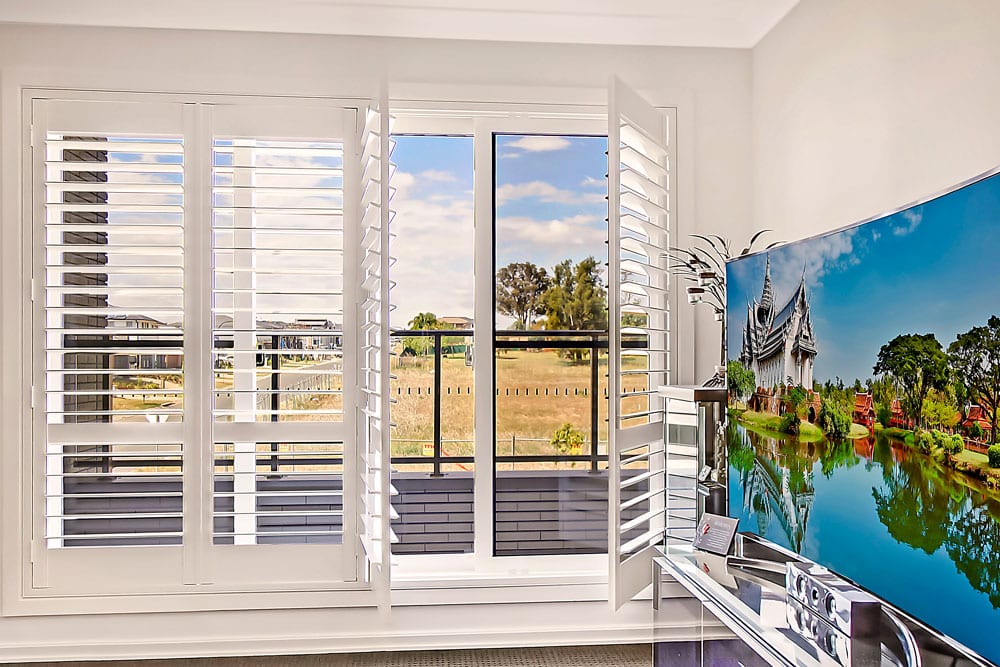
Shutters create a structured, tailored finish that soft furnishings cannot easily match. They frame windows neatly, add architectural texture, and keep rooms looking polished without needing constant adjustment. Designers often favour them in homes where a clean, built-in look is preferred over layered fabric treatments. As interior designer Amanda Lee notes in her ASID profile, shutters can “quietly elevate a room without overwhelming it” because they balance function and simplicity.
Quality of Life Improvements
Plantation shutters improve privacy, allow flexible light control, and can reduce glare without darkening a room completely. That matters in bedrooms, street-facing living rooms, and home offices. They also help with day-night modulation: open them for morning light, tilt them for privacy in the afternoon, and close them for a more restful evening feel. Some homeowners also report a subtle reduction in outside noise, especially when shutters are paired with well-sealed windows.
Customization and Decor Integration
Custom options include white and off-white paint finishes, timber stains, wider slats for a more contemporary look, hidden tilt rods, and moisture-resistant materials for bathrooms and laundries. Upcharges often apply for premium finishes, wider panel spans, and automation. Those extras raise cost, but they also help the shutters feel like part of the home rather than an afterthought.
Expert Style vs Cost Perspectives
Interior designer viewpoint: Shutters are worth it when the goal is a calm, high-end, long-lasting interior.
Energy auditor viewpoint: Shutters are worth it when comfort, shading, and moderate insulation matter, but they should not be expected to replace proper insulation or external shading in extreme climates.
Together, these viewpoints show the key trade-off: shutters are both a design feature and a functional upgrade, but they are rarely a standalone energy miracle.
Comparing Financial Worth: Plantation Shutters vs Alternative Treatments
If you want the best financial value, compare more than the sticker price. True value includes lifespan, maintenance, energy performance, and resale appeal. In some homes, roller shutters win on function. In others, plantation shutters win because they look better, last longer, and contribute more to buyer perception.
Cost and Performance Table
| Option | Typical Installed Cost | Annualised Cost | Energy | Resale |
|---|---|---|---|---|
| Plantation shutters | A$400–A$1,400/window | Low to moderate | Moderate–high | Moderate–high |
| Roller shutters | A$500–A$1,200/window | Moderate | High | Moderate |
| Blinds | A$100–A$500/window | Moderate | Low–moderate | Low–moderate |
| Curtains | A$120–A$700/window | Moderate to high | Low–moderate | Low |
Strengths and Weaknesses of Each Option
- Plantation shutters: strong style, strong lifespan, moderate energy benefit, strong buyer appeal, higher upfront cost.
- Roller shutters: strongest heat and security performance, but more utilitarian in appearance.
- Blinds: cheapest to install, but usually weaker in durability and resale appeal.
- Curtains: good for softness and decor, but less durable and more maintenance-heavy over time.
Regional Considerations and Specialized Alternatives
Climate should influence your decision. In high-solar-gain homes, especially west-facing rooms, roller shutters can be the better technical option for heat rejection. In coastal areas, composite shutters often outperform timber because they handle humidity and salt exposure better. In inland dry climates, hardwood can be a smart choice if the finish is maintained. For heat-focused readers, our article on plantation shutters vs roller shutters is a useful comparison point.
Installation Process and Financial Impact
Installation quality affects performance, appearance, and warranty coverage. A poorly fitted shutter can rattle, sit unevenly, or leave gaps that reduce thermal benefit. In contrast, a precise installation can make the shutters look built-in and help preserve long-term value.
Professional vs DIY Costs and Risks
DIY installation may suit confident homeowners with accurate measuring skills, a drill, spirit level, and the ability to patch minor frame issues. However, plantation shutters require careful square measuring, hinge alignment, and sometimes minor carpentry. Common mistakes include incorrect rebates, uneven reveals, and over-tightening hardware. Professional installation usually costs more, but it reduces warranty disputes and fitting errors. For step-by-step advice,
Installation Impact on Durability and Value
Two common problems reduce long-term value. First, if the shutter frame is installed out of square, panels can bind or wear unevenly. Second, if installers do not allow enough clearance for swelling in humid climates, timber components can rub and finish damage may occur. In both cases, the homeowner may face repeated adjustments or repairs that would have been avoidable with proper fitting.
Typical Installation Timeline and Unexpected Costs
A standard home may take one to three days depending on the number of windows and any frame repair work. Unexpected costs can include:
- Frame repair or patching
- Paint or stain touch-ups
- Site visit or measurement fees
- Hardware upgrades
- Removal and disposal of old window coverings
Budgeting an extra 10%–15% for contingencies is sensible, especially in older homes with uneven window reveals.
Consumer Reviews and Testimonials: Real Buyer Experiences
Review patterns matter because they reveal what owners value after the purchase is complete. Across platforms such as Houzz, Google Reviews, and ProductReview.com.au, the most common themes are comfort, style, build quality, and the professionalism of installers.
Common Themes in Reviews
- Many buyers praise the premium look and the way shutters lift a room immediately.
- Comfort and glare reduction are frequently mentioned, especially in sunny rooms.
- Long product life is a recurring positive, particularly for composite models.
- Negative reviews often focus on installation delays or poor measurement rather than the shutters themselves.
- Some buyers feel the upfront price is high, but many still consider the purchase worthwhile over time.
Positive and Negative Financial Outcomes
| Example | Outcome | Takeaway |
|---|---|---|
| Melbourne owner | Reported lower winter heating use after install | Best result came from snug fit and good orientation |
| Brisbane townhouse | Felt cooling comfort improved, modest bill savings | Climate comfort can matter more than pure ROI |
| Sydney sale | Agent said shutters improved presentation | Resale value may show up as faster buyer interest |
Effect of Reviews on Buyer Choices
When reading reviews, look for comments on lead times, installer punctuality, warranty handling, and after-sales support. The most useful reviews usually describe whether the product was measured correctly, how it performs in sun or humidity, and whether the company resolved any defects quickly. Those details tell you more than star ratings alone.
Final Verdict: Are Plantation Shutters Worth the Investment?
For the right home, plantation shutters are often worth the money. They are not the cheapest option, and they rarely pay back quickly through energy savings alone. But they can deliver a strong mix of aesthetics, privacy, durability, and resale appeal that cheaper treatments struggle to match.
Summary of Quantitative Benefits
- Average cost: A$400–A$1,400 per window installed
- Typical payback: often 20+ years if based on energy savings alone
- Lifespan: commonly 15–30 years, longer for quality composite systems
- Resale uplift: may support a modest premium or faster sale in presentation-sensitive markets
Summary of Qualitative Strengths
- Timeless, built-in appearance
- Strong privacy and light control
- Low routine maintenance
- Good customization options
Who Should Invest
If you plan to stay in the home for 7–10 years or more, want a more permanent design upgrade, and value comfort as well as resale appeal, shutters are a strong option. If you are renovating on a tight budget, moving soon, or only need a short-term fix, blinds or curtains may be more practical.
Recommendations for ROI Maximization
- Choose a climate-appropriate material: composite for humid/coastal homes, hardwood for dry interiors.
- Get at least three quotes and compare both material and labour costs.
- Ask whether the installer offers a measure-check or post-install service.
- Keep a maintenance log so you can prove care during resale.
- Consider rebates or energy programs available in your state before buying.
- Use shutters as part of property staging if you plan to sell within 12 months.
If you are still comparing options, start with a local quote and a side-by-side comparison of materials. Get a free local quote and see whether plantation shutters fit your budget, climate, and goals.
Sources & Further Reading
U.S. Department of Energy (2023) — window insulation and heat transfer guidance.
Window Covering Manufacturers Association (2024) — product and industry guidance.
CoreLogic (2024) — Australian property market insights.
REA Group / realestate.com.au (2024) — buyer and market commentary.
Realtor.com Research (2024) — U.S. buyer preference data.
Frequently Asked Questions
What are plantation shutters made of?
Plantation shutters are usually made from hardwood, composite, or vinyl/PVC. Hardwood offers the most premium look, composite provides strong stability in changing climates, and vinyl is often the most budget-friendly and moisture-resistant option for bathrooms, laundries, and other humid spaces.
How much do plantation shutters cost including installation?
In Australia, plantation shutters typically cost about A$400 to A$1,400 per window installed, depending on material, window size, and complexity. A full home installation can range from a few thousand dollars to well over A$10,000 if you choose premium finishes or custom shapes.
Can plantation shutters help reduce home energy bills?
Yes, plantation shutters can help reduce energy bills by improving insulation and limiting heat transfer through windows. Savings are usually modest rather than dramatic, but they can improve comfort and reduce heating or cooling use, especially in rooms with strong sun exposure or draughty windows.
How do plantation shutters compare to blinds and curtains in value?
Plantation shutters usually cost more upfront than blinds or curtains, but they often last longer and add more visual appeal. That makes them better value for homeowners who want a permanent upgrade, while blinds and curtains are usually better for shorter budgets or short-term living.
Do plantation shutters increase home resale value?
Plantation shutters can improve resale appeal because buyers often see them as a quality, built-in feature. They may not always increase a formal valuation, but they can help a home present better, photograph better, and feel more move-in ready, which can support stronger offers.
How long do plantation shutters typically last?
Most plantation shutters last around 15 to 30 years, depending on material quality and climate. Hardwood may last longer in dry homes, while composite often performs well in humid or coastal areas. Vinyl can be durable too, though it usually has a shorter lifespan than premium materials.
Is professional installation necessary for plantation shutters?
Professional installation is not always mandatory, but it is usually recommended. Accurate measuring and fitting are critical because small mistakes can cause gaps, binding, or reduced insulation performance. Professional installation also helps protect warranties and reduces the chance of expensive correction work later.
What maintenance do plantation shutters require and what are the costs?
Maintenance is usually light: regular dusting, occasional wipe-downs, hinge checks, and rare repairs or repainting for timber models. In Australia, minor servicing may cost around A$80 to A$200 when needed. Compared with curtains or cheaper blinds, shutters generally have lower ongoing maintenance demands.