
Do Plantation Shutters Help with Light & Sound
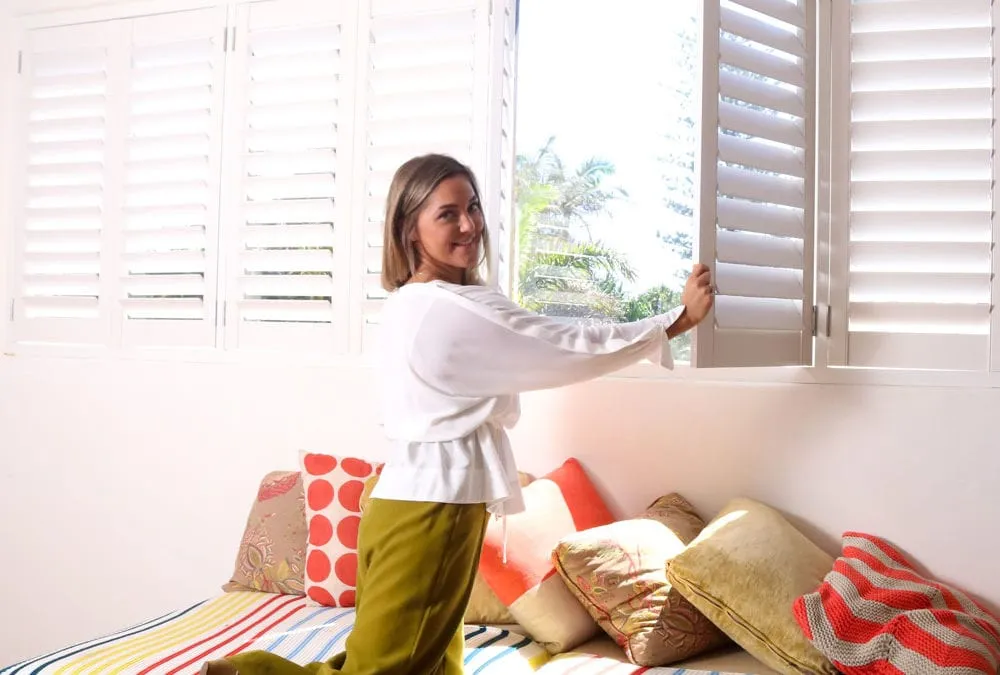
Plantation shutters are celebrated for their elegant aesthetic, but their functional benefits in managing light and sound are increasingly drawing attention. Homeowners seeking precise control over natural light and quieter living environments often ask: Do plantation shutters help with light & sound? This comprehensive guide unpacks the technical mechanisms behind this window treatment’s performance, focusing on light blocking strips, light filtering capabilities, and acoustic benefits to equip you with the knowledge for optimal home environment control.
Understanding How Plantation Shutters Manage Light
Plantation shutters offer a unique blend of style and function when it comes to natural light control. Their design enables homeowners to manipulate indoor lighting precisely, from filtering ambient daylight to blocking unwanted glare. Unlike simple curtains or blinds, shutters give the ability to adjust the slat angles, impacting the quantity and quality of light entering a room.
Beyond standard windows, plantation shutters for sliding doors extend light and sound control solutions to larger openings, offering versatile and practical design options.
The Role of Light Blocking Strips in Plantation Shutters
Light blocking strips, also called light blocker strips, are essential components integrated into plantation shutters to minimize light leakage around the edges. These strips, typically made of foam or rubber, seal the gaps between the shutter frame and window frame.
When closed, the light blocker strips function similarly to weather stripping but with the exclusive aim of preventing light seepage. They are positioned along the perimeters where louvers meet the frame, focusing on blocking the often overlooked peripheral light that penetrates around window treatments.
This mechanism is especially beneficial for rooms requiring near-darkness, such as bedrooms, media rooms, or home offices. The effectiveness of these strips varies by shutter quality and installation precision: high-grade strips can reduce light leakage by up to 85%, according to manufacturer specifications and installer reports.
Light Filtering Mechanisms: Controlling Natural Light without Darkening Rooms
Beyond blocking light, light filtering is a key function of plantation shutters. By adjusting the louver blade angles, you can modulate daylight penetration, reducing harsh sun rays while maintaining bright, natural illumination.
The louvers’ wide range of motion allows light to be diffused softly across a room, reducing glare on screens or reflective surfaces. This capability makes plantation shutters much more dynamic than traditional curtains that often either block all light or none, and blinds that offer limited angled control.
Furthermore, the design of louvers encourages airflow alongside light modulation, preserving ventilation while controlling brightness — a critical factor for comfort in humid or warm climates.
Comparison of Light Control: Plantation Shutters vs. Curtains Light Impact
When comparing curtains light effects to plantation shutters, some important distinctions emerge. Curtains generally absorb or block light based on fabric opacity but often allow light leakage around the edges, particularly if not paired with blackout liners. Plantation shutters, especially with light blocking strips, provide a tighter seal against window frames, drastically reducing edge light leak.
While curtains soften light with fabric translucency, shutters offer more customizable light levels through manual louver adjustments, effectively controlling both intensity and direction of daylight. This makes plantation shutters a superior choice for ambient light management combined with aesthetic design.
When selecting window treatments, comparing plantation shutters versus blinds benefits is key for informed decisions on light filtration and noise reduction.
Understanding the differences between plantation shutters and louvres is essential to choose the optimal solution for light and sound control in your space.
Practical Use Cases for Windows with Plantation Shutters in Different Lighting Conditions
Real-world applications highlight how effectively plantation shutters manage light:
- Urban apartments: Sideways sunlight filtered via adjusted louvers to prevent glare while preserving city views.
- Bedrooms: Louvers fully closed with light blocker strips to create a dim environment conducive to sleep.
- Home offices: Precise light angle control to reduce screen glare while maintaining adequate work illumination.
- Living rooms: Soft diffused lighting through partially tilted louvers creating warm ambiance without harsh brightness.
These scenarios demonstrate plantation shutters’ flexible light control suited to diverse family needs and room functions.
With an in-depth understanding of their light management capabilities established, it is equally important to explore how plantation shutters influence household noise levels.
Acoustic Benefits of Plantation Shutters: Sound Insulation Explained
Beyond aesthetics and light control, plantation shutters serve as a practical layer in noise reduction techniques within residential spaces. Their contribution to sound insulation stems from both material properties and design configurations, making them a smart choice in noisy or urban environments.
How Plantation Shutters Contribute to Noise Reduction
Plantation shutters reduce ambient noise through multiple mechanisms. When closed, the solid panels act as an additional barrier, dampening external sounds such as traffic, neighbors, or outdoor activity. The tight fit of louvers and frames, assisted by shutter sealing features, minimizes sound waves’ ability to enter or resonate within the space.
Independent testing by some manufacturers shows a potential noise reduction of 6-12 decibels (dB) depending on shutter material and installation quality—measured at typical urban background noise levels (around 60-70 dB). This reduction can be equivalent to muting traffic noise by half, providing perceptible quietness improvements.
To ensure maximum sound and light performance, installers must be aware of DIY plantation shutter installation pitfalls that can compromise sealing and noise reduction effectiveness.
Materials Used and Their Impact on Acoustic Properties (Wood, Composite)
The acoustic performance largely depends on the shutter material:
- Wood shutters: Natural wood’s density and internal cellular structure give moderate sound dampening capability. They absorb a portion of noise vibrations and help reduce echo inside rooms.
- Composite shutters: Engineered from wood fibers combined with polymers, these tend to have better acoustical sealing due to uniform density and rigidity, often outperforming wood in reducing sound transmission.
Table 1 highlights the comparative acoustic benefits of commonly used shutter materials:
| Material | Density (kg/m³) | Typical Sound Reduction (dB) | Notes |
|---|---|---|---|
| Wood (Basswood, Cedar) | 500-600 | 6-8 | Natural acoustic absorption, moderate sealing |
| Composite (MDF/Polymer Blend) | 700-800 | 8-12 | Higher density, better acoustic barrier properties |
Role of Design Features and Seals in Enhancing Soundproofing
Besides materials, shutters employ key design features to improve acoustic performance:
- Sealing strips and foam gaskets: Reduce gaps as potential sound transmission points.
- Thick frame construction: Adds mass and stability, which disrupts sound vibrations.
- Multi-panel configurations: Introduce air pockets that buffer sound waves.
These features work together to provide ambient noise attenuation, integral in modern home acoustic design.
Sound Control in Home Design: Integration with Other Noise Mitigation Strategies
Plantation shutters complement home noise mitigation when combined with other strategies such as:
- Heavy carpets and drapes for internal absorption
- Window glazing upgrades (double or triple-pane glass)
- Exterior landscaping buffers (hedges, fences)
Thus, shutters serve as an effective, visually appealing acoustic component but are part of a holistic approach to sound control.
Technical Aspects and Practical Considerations of Light & Sound Management
Efficiency and Installation Compatibility of Light Blocker Strips
Light blocker strips’ efficiency depends on quality, material flexibility, and installation precision:
- Material quality: High-density foam or rubber strips maintain tight sealing over time without compression loss.
- Application: Strips must be carefully fitted around the entire shutter perimeter to avoid uneven gaps.
- Compatibility: Compatible with most window frame types but optimal for casement or recessed window designs.
Properly installed, light blocker strips can eliminate nearly all peripheral light leakage, creating near blackout conditions when shutter louvers are closed.
Acoustic Performance Metrics for Plantation Shutters
Plantation shutters are evaluated through metrics like Sound Transmission Class (STC), reflecting their ability to block airborne sound:
- Typical plantation shutter STC ratings range 25-30, with composite materials reaching up to 32 under optimized sealing.
- Higher STC means better sound insulation; installed alongside quality window glass, total STC can rise significantly.
- Decibel reduction (dB) measures tangible noise level drops, ranging around 6-12 dB depending on shutter characteristics.
Considering cost considerations for window shutters in Perth is vital to balance budget constraints while ensuring optimal light and sound management features.
Energy Efficiency Benefits Related to Light and Sound Control
The interplay between light control and sound insulative properties positively impacts a home’s energy efficiency:
- Light blocker strips prevent excess heat gain or loss by sealing drafts and limiting unwanted sunlight during warm or cold seasons.
- Soundproofing reduces the need for mechanical sound masking devices (white noise machines, fans), indirectly saving energy.
- Shutters contribute to thermal insulation with their air gaps and material composition, complementing home heating and cooling systems.
These factors cumulatively reduce utility bills, with some households reporting savings of up to 10% on heating and cooling costs.
Privacy Control and Its Overlap with Light and Sound Management
Plantation shutters’ design synergizes privacy with light and sound management:
- Adjustable louvers allow for light and air while maintaining visual privacy, ideal for street-facing windows.
- Closed shutters create a solid barrier not only against light but also against visual or auditory intrusion.
- A well-sealed shutter reduces sound transmission from private to public spaces, enhancing occupant security and comfort.
This multi-functional quality underscores plantation shutters as a smart, privacy-conscious window solution.
Plantation Shutters vs. Other Window Treatments: Focus on Light and Sound Control
Curtains Light Filtering and Blocking Compared to Plantation Shutters
While curtains vary widely, their light filtering and blocking generally lack the precision afforded by plantation shutters:
| Feature | Plantation Shutters | Curtains |
|---|---|---|
| Light control precision | Adjustable louvers for directional control | Fabric-based; open or closed with limited adjustments |
| Light leakage | Minimal with light blocker strips | Often significant at edges, unless blackout liners used |
| Light filtering options | Variable by slat angle | Depends on fabric opacity |
Besides edge sealing, shutters provide robust frame fitment and louver overlap that drastically reduce unwanted light entry and enhance room darkening capabilities. This contrasts standard blinds or curtains, which often allow gaps or require expensive blackout layering.
Acoustically, plantation shutters usually outperform curtains and blinds due to:
- Material density and rigidity compared to soft fabrics
- Tighter seals reducing sound leakage paths
- Additional mass adding sound vibration dampening
In controlled studies, shutters saw noise reduction 3-5 dB greater than standard curtains under similar conditions, providing a noticeable quietening effect.
In addition to plantation shutters, many homeowners consider outdoor café blinds for Perth businesses as another premium window covering option, particularly for commercial or outdoor applications.
Optimizing Windows with Plantation Shutters for Maximum Light and Sound Control
Best Practices for Enhancing Light Blocking and Sound Insulation
- Seal Every Edge: Ensure light blocker strips and acoustic seals fit snugly around all shutter edges without compression loss.
- Proper Louver Adjustment: Tilt louvers fully closed for maximal light and sound blocking or partially open for controlled light filtering.
- Choose Optimal Materials: Composite shutters provide superior sound insulation and durability for noisy environments.
- Layer Treatments: Combine shutters with thermal curtains or blinds for enhanced soundproofing and blackout performance.
- Consider Window Frame Types: Recessed or casement frames improve seal effectiveness and overall shutter efficiency.
For tailored home solutions, pairing plantation shutters with other elements can address both aesthetic and functional goals. For example, integrating clear PVC café blinds for UV protection and style or blackout curtains behind shutters builds layered defense against light and sound intrusion.
Such combinations are especially useful in rooms with stringent light blocking or noise requirements, like nurseries or home theatres.
Combining plantation shutters with outdoor blinds suited for balconies can create layered protection that maximises both light management and acoustic comfort.
Selecting ideal locations for plantation shutters ensures maximum effectiveness in managing light and acoustic environments in your home.
Maintenance Tips to Preserve Light and Acoustic Performance
- Regular Inspection: Examine light blocker strips and seals for wear or compression and replace as needed.
- Cleaning: Dust louvers and frames to maintain smooth operation and seal effectiveness.
- Adjustment Checks: Periodically verify louver tension and closing alignment to avoid gaps.
- Professional Servicing: Engage shutter specialists for annual tune-ups to uphold optimal light and sound performance.
Effective maintenance preserves the shutters’ dual functional capacity over the long term.
Frequently Asked Questions About Plantation Shutters’ Light and Sound Benefits
What degree of noise reduction can plantation shutters realistically provide?
Plantation shutters typically offer noise reduction ranging from 6 to 12 decibels, depending on material density, sealing quality, and installation accuracy. While not a substitute for full soundproof glazing or specialized acoustic treatments, they provide meaningful ambient noise attenuation that can reduce perceived noise by up to 50%, making homes noticeably quieter.
Can light blocking strips eliminate all light leakage around plantation shutters?
High-quality light blocker strips significantly reduce light leakage, often achieving near blackout conditions when combined with fully closed louvers. However, some minimal light diffusion may still occur due to window frame or wall structural irregularities. Custom installation helps minimize such gaps.
How do different shutter materials influence both light filtering and sound insulation?
Wood shutters naturally absorb and diffuse some sound and light through their cellular structure but may be less dense and heavier. Composite materials are denser with superior sound blocking and more consistent light blockage owing to uniform structure. Both materials provide excellent light filtering through louver adjustments, but composites generally yield better sound insulation.
Are plantation shutters effective for energy savings related to daylighting and noise?
Yes, plantation shutters improve energy efficiency by reducing heat transfer via effective sealing and light control. Diminished heat gain in summer and heat loss in winter lowers HVAC demands. Additionally, sound insulation reduces need for energy-consuming noise-masking devices, contributing to overall energy savings estimated up to 10% in utility costs.
How do privacy needs intersect with light and sound control in plantation shutters?
Privacy is integral to plantation shutters, as adjustable louvers enable occupants to modulate visibility and light simultaneously. Closed shutters block both sightlines and noise transmission, offering a dual layer of privacy protection while maintaining control over interior brightness.
For practical guidance on integrating plantation shutters with complementary elements and maximizing their benefits, consider key home upgrades before selling, including plantation shutters.
As confirmed in recent trends, home improvements in 2023 that add value to your house frequently include plantation shutters due to their combined aesthetic and functional benefits related to light and sound control.
From precise control of natural light with advanced light blocker strip technologies to substantial ambient noise reduction, plantation shutters deliver multifunctional benefits well beyond décor. Their technical features combined with material science and smart design make them an outstanding choice for homeowners seeking optimized living environments.
If you’re considering plantation shutters for your space, integrating them thoughtfully can not only enhance comfort but also provide measurable energy and noise benefits that last for years.
For homeowners in Perth weighing external and internal options, it’s worth exploring roller shutters perth as a complementary solution—roller shutters add strong external security, improved thermal performance and additional noise reduction that can work alongside interior plantation shutters for comprehensive light, sound and climate control.