
Can Outdoor Blinds Handle Perth’s Weather? A Practical Guide to Rain, Wind and Sun
Outdoor Blinds in Perth: Key Considerations
Outdoor blinds are both stylish additions and hard-working shields, helping Perth homeowners enjoy patios, balconies, and alfresco areas year-round. But can outdoor blinds really endure Perth’s dramatic mix of sun, rain, and wind?
- Reliable protection against weather extremes
- Customisable privacy—day and night
- Enhanced comfort for outdoor living and entertaining
- Furniture and flooring preservation from UV and water
- Potential energy savings due to reduced radiant heat
It’s essential to choose blinds engineered for WA conditions. Not all blinds offer the same weatherproofing, so weatherproof outdoor blinds are the go-to for maximum longevity, protection, and comfort.
Quick Definitions
- Weather-resistant: Repels rain and moisture but may absorb under protracted exposure
- Waterproof: Impervious to liquid—ideal for protection against heavy downpours
- Side-retention tracks: Channels that lock blind edges into place, minimising gaps and flapping
- Clear PVC “café” blinds: Transparent panels for wind and rain protection with uninterrupted views
- HDPE or polyester-PVC mesh: Strong woven fabrics blocking wind, UV, and heat while allowing some airflow
- Pelmets/cassettes: Protective hood covering rolled-up blinds to shield from UV and rain
- Bottom bar/stoppers: Weighted, lockable base to hold blinds taut and secure
- Wind sensors: Tech in motorised blinds that retracts when high wind is detected
- Solar reflectivity: Capability of fabric to bounce back sunlight, reducing heat transfer
Outdoor Blinds vs Rain
Perth’s unpredictable showers can spill indoors or ruin alfresco plans, but with the proper blinds, you can create a dry oasis all year round.
- Clear PVC blinds: Act as a solid rain barrier, ideal for fully enclosing outdoor spaces. They block wind-driven rain and keep patios dry.
- Heavy-duty mesh: Offers great rain defence while allowing air circulation—best for areas where you need a balance of airflow and shelter.
Premium outdoor blinds are water-resistant, not 100% waterproof. Side-retention tracks are vital for stopping rain sneaking in through gaps. Precision installation and regular checks are important to maintain weatherproofing, especially during the wet season.
Outdoor Blinds vs Wind
Fremantle Doctor breezes and sudden Perth gusts mean you need blinds with genuine wind resistance—not just marketing claims.
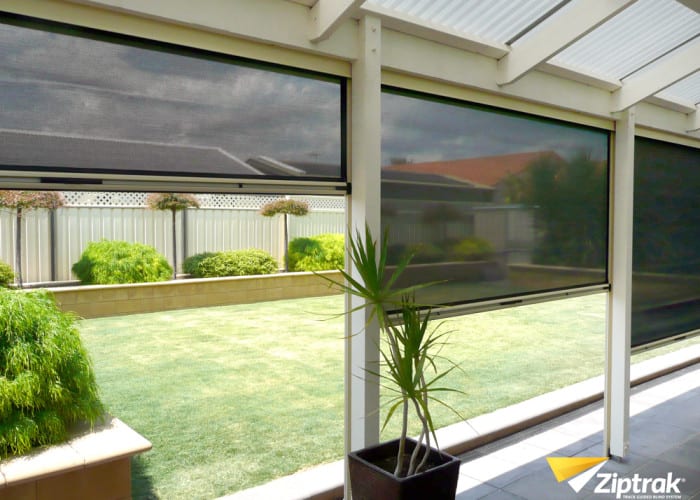
- Side-retention track systems (e.g. Ziptrak, Slidetrack) stop blinds from flapping, chattering, and billowing—critical for maintaining protection and longevity.
- Cable-guided or spring-roller blinds offer entry-level wind stability. For locations exposed to persistent strong wind, upgrade to side-retention tracks.
Explore zip track blinds for wind-resistant design, or consider motorised options with wind sensors, ensuring your blinds retract automatically in dangerous gusts.
Outdoor Blinds and Sun Protection
Long, harsh summers mean relentless UV, glare, and indoor heat gain. Outdoor blinds, especially quality mesh varieties, are a proven shield:
- Cut down glare and radiant heat
- Block up to 99% of UV for family and furniture safety
- Maintain plant health by filtering excessive solar exposure
- Lower indoor cooling costs by keeping hot sun at bay
Choose the right mesh density—blockout and heavy-duty mesh for hotter, west-facing areas and lighter meshes where some airflow and light are desired. Automated blinds can be timed to unfurl during peak sun hours for optimal energy and comfort.
Materials and Systems Compared
Technical terms:
– PVC: Clear, flexible polyvinyl chloride.
– HDPE mesh: UV-stabilised high-density polyethylene.
– Ziptrak/Slidetrack: Patented track systems for wind resilience.
| Option | Best For | Rain | Wind | Sun/UV | Privacy | Notes |
|---|---|---|---|---|---|---|
| Clear PVC “café” blinds | Year-round views, warmth retention | Excellent | Good with tracks | High transmissivity; supplement with awnings/shade | Low day/night | Needs gentle cleaning to avoid scratches. Can magnify heat—ventilate in summer. |
| Heavy-duty mesh (95–99%) | Summer comfort, airflow | Good for showers | Very good (with tracks) | Up to 99% UV block | Excellent for day privacy | Perfect for alfresco; balances shade and breezes. |
| Blockout mesh (100%) | Extreme sun/wind/rain | Very good | Excellent | Blocks all sunlight | Maximum | Ideal for west/north-west; can darken area. |
| Side-retention systems | All-weather defence | Minimises ingress | Stabilises and protects | Consistent coverage | Superb | Fewer gaps and draughts. Best in exposed locales. |
For a deep dive, see Ziptrak vs. Slidetrack blinds—all track systems are not created equal.
Choosing the Right Blinds for Perth Conditions
Match Material and System to Your Setting
- West and north-west facing: Blockout mesh to counteract roast-like afternoon sun
- South-westerly winds: Robust side-retention and bottom locks
- Beachside/coastal: Marine-grade hardware and rinse regularly
- Urban apartments: Lightweight, compact self-locking systems
Pick Your Operation Style
- Manual (crank/spring): Low-frills and cost-effective—good for small spaces
- Motorised (sensor-enabled): Effortless, integrates with smart home, retracts automatically for safety
- Remote/app control: Perfect for high-use entertaining or elderly households
Plan Fitment and Longevity
- Install slightly bigger than the opening for full coverage
- Always use pelmets where possible—doubles the life of the fabric
- Corrosion-proof fastenings needed for all severe-weather and coastal locations
Installation Tips & Expert Insights
- Position side-tracks and locks with precision: Tight tolerances defeat draughts and water.
- Check overhead/side clearances: Room for pelmets and tracks is essential for pro fitment.
- Use stainless/marine-grade hardware: Especially in salt air or wind-prone suburbs.
- Test all mechanisms pre-handover: Confirm smooth operation, firm locking, and correct tension.
How to Operate in Changing Weather
- Before rain: Fully lower, lock base and sides into retention tracks.
- During showers: Keep taut. Don’t partially open (invites pooling/flapping).
- High winds forecast: Retract and secure; don’t leave exposed to gusts.
- After storms: Rinse salt/grit off, check fixing points and clear tracks.
- Hot, sunny days: Lower mesh blinds before midday to trap cool, block heat.
Care Tips for Year-Round Performance
Simple maintenance keeps outdoor blinds tough, tidy, and long-lasting despite Perth’s extremes:
- Keep tracks/channels free of sand and salt—rinse monthly
- Wipe with soft, soapy cloth; avoid abrasive or harsh cleaners
- Never roll up wet—dry first to prevent mildew, warping
- Check hardware/locks quarterly for corrosion or loosening
- Use only recommended lubricants on rollers and tracks
Simple Maintenance Checklist
- Monthly: Rinse mesh/PVC and clear tracks
- Quarterly: Check lock and track tension, lubricate rollers
- Annually: Inspect and refresh silicone seals, replace any perished weatherproof tapes, book a pro check-up for motorised systems
People Also Ask
Are outdoor blinds waterproof?
Most are water-resistant, but clear PVC offers the best rain protection. Mesh blinds block occasional showers, but not heavy, persistent rain. Explore our waterproofing guide for full details.
What wind speed can outdoor blinds handle?
Blinds with side tracks can handle moderate breezes (up to 50–60km/h if well-installed). Always retract blinds during severe wind warnings to prevent damage.
Do outdoor blinds reduce heat inside the home?
Heavy-duty mesh blocks up to 99% UV, reduces radiant heat, and can keep your home cooler—especially on Perth’s hot afternoons.
Can you see through outdoor blinds at night?
With lights on, privacy is reversed—you’re visible from outside. For total privacy, choose blockout mesh or add internal curtains after dark.
FAQs
How long do quality outdoor blinds last?
With regular cleaning, a protective pelmet, and corrosion-resistant fixings, well-made outdoor blinds typically deliver 7–12 years of reliable service in Perth’s climate.
Which is better for rain—PVC or mesh?
Clear PVC blocks wind and rain entirely, perfect for winter or making a patio weatherproof. Mesh offers excellent shower protection plus airflow, great for summer alfresco living.
Will outdoor blinds make my area hotter in summer?
Open-weave mesh reduces radiant heat, allows airflow, and reflects sunlight—especially if you opt for lighter colours.
Do I need council approval?
Most standard patio blinds don’t require council approval, but always confirm local guidelines for your property type before installation.
Can blinds be fitted to apartments and balconies?
Yes, so long as there are sound mounting points and compliance with strata by-laws. Side-retention tracks are especially effective in high-rise or windy settings.
Shop Quality Outdoor Blinds Today
Whatever the Perth weather brings, quality outdoor blinds let you make more of your outdoor spaces—summer or winter, rain or shine. Discover the comfort, privacy, and energy savings our motorised options provide, and transform your patio, balcony, or alfresco area for year-round enjoyment.