
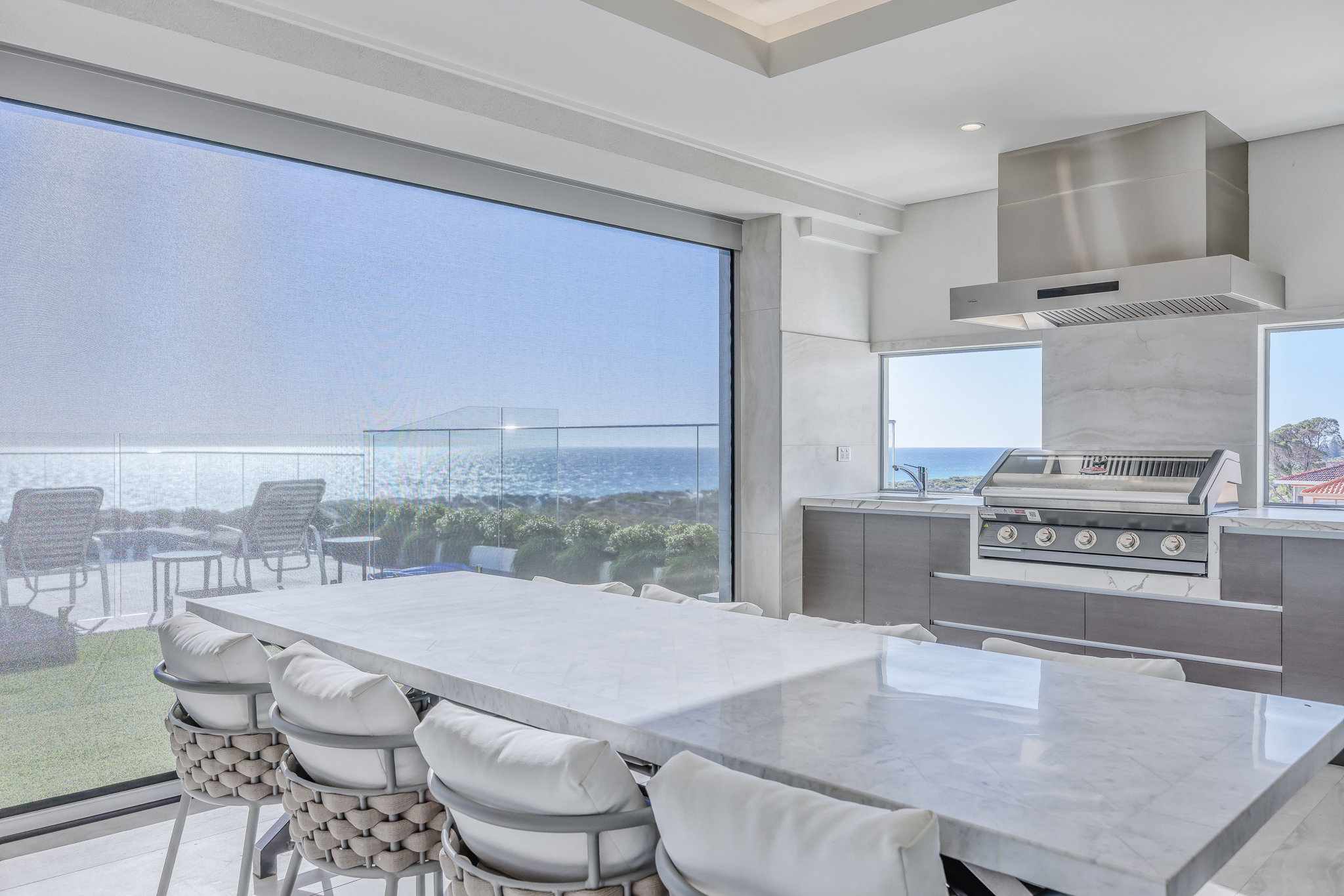
Choosing the right outdoor blinds materials can transform your outdoor living experience in Perth’s coastal climate. From PVC to mesh and fabric options, understanding the different outdoor blinds materials available is key to making a decision that fits your specific needs and the climate you live in. This guide explains the main types of outdoor blind materials, their advantages, and how to pick the best fit for your home and lifestyle.
For product options, pricing and professional installation, browse our full range of outdoor blinds designed for Perth’s coastal conditions.
Table of Contents
- Quick Material Comparison
- How to Choose in 5 Steps
- Types of Outdoor Blinds Materials
- Operation & Hardware Options
- Perth Climate & Site Considerations
- Benefits of Outdoor Blinds
- Care & Maintenance
- DIY Installation Overview
- Frequently Asked Questions
- People Also Ask
- Glossary: Handy Definitions
Quick Material Comparison
Below is a quick comparison to help you choose the right material for your space — for café-style enclosures see our range of cafe blinds.
| Material | UV/Sun | Airflow | Privacy | Wind/Rain | Maintenance | Best For |
|---|---|---|---|---|---|---|
| PVC (tinted/opaque) | High | Low | Medium–High | Excellent | Low–Medium | Wind/rain protection, winter warmth |
| Clear PVC | High (no glare reduction) | Low | Low | Excellent | Medium | All-weather with view retention |
| Mesh (HDPE/PVC-coated) | High (varies by openness) | High | Medium–High | Good | Low | Hot summers, alfresco airflow |
| Fabric (acrylic/canvas) | High | Medium | High | Good | Medium | Architectural finish, colour choice |
How to Choose in 5 Steps
- Define your goal: Shade and airflow, wind/rain block, or year‑round enclosure for patios and alfresco areas.
- Match to orientation: West/north walls need stronger glare control; coastal edges need better wind resistance and corrosion protection.
- Select material: Mesh for ventilation; PVC for weather block; fabric for design-led shade with good UV resistance.
- Pick operation: Manual spring, crank, or motorised with remote/smart control; consider child safety and ease of use.
- Confirm hardware: Track-guided systems improve wind performance; choose marine‑grade fittings for coastal durability.
For tailored options and professional installation across the region, explore our range of outdoor blinds perth wa to find materials and hardware suited to Perth’s coastal conditions and your lifestyle.
Types of Outdoor Blinds Materials
1. PVC Blinds
PVC blinds are a popular choice for exposed areas thanks to their moisture resistance and durability. They won’t warp in high humidity, making them well suited to Perth’s sea breezes and coastal air. Available in clear, tinted, or opaque finishes, PVC blinds offer strong weather protection and can be wiped clean easily. Note that fully enclosed PVC areas can retain heat on hot days, so consider ventilation or pairing with shade where needed.
- Pros: Excellent wind and rain block; robust; good heat retention in cooler months; easy to clean.
- Cons: Minimal airflow; can trap heat; may show creases if mishandled; clarity depends on care.
- Best for: Patios needing weatherproofing, café‑style closures, winter comfort zones.
Pro tip: Look for UV‑stabilised PVC with adequate thickness (micron rating) for clarity and longevity.
2. Mesh Blinds
Mesh blinds provide excellent ventilation while delivering privacy and sun protection. In Perth’s hot summers, they let cooling breezes flow through while blocking glare and a significant portion of UV. Openness and weave density (for example, around 5–10%) influence how much light, heat, and visibility you retain. Premium meshes can also filter wind and dust and are lightweight and easy to operate—ideal for patios, alfresco areas, and balconies.
- Pros: Breathable; good heat and glare control; daytime privacy; low maintenance; great for alfresco living.
- Cons: Less rain block than PVC; privacy reduces at night with internal lighting.
- Best for: West‑facing areas, poolsides, and breezy patios needing shade without losing airflow.
Definition – Openness factor: The percentage of open area in the weave. Lower numbers block more sun and improve privacy, while higher numbers increase view-through and airflow.
3. Fabric Blinds
Fabric blinds, including solution-dyed acrylics and outdoor-grade canvas, come in a wide range of textures and colours for a tailored look. Modern outdoor fabrics can be treated for UV fade resistance, mould resistance, and water repellence. They typically need a little more care than PVC or mesh (gentle cleaning and complete drying after rain), but they deliver a soft, architectural finish with strong shade performance.
- Pros: Excellent colour/design choice; strong sun control; softer look; good privacy options.
- Cons: Needs proper drying to avoid mould; can be heavier; may require more frequent cleaning.
- Best for: Design-led alfresco areas, façades, and windows where colour and texture matter.
Definition – Solution‑dyed acrylic: A fabric where colour is added to the fibre core during manufacturing for superior fade resistance in harsh UV.
4. Clear PVC Blinds
Clear PVC blinds are ideal when you want all-weather protection without losing your view. Common in patios and alfresco areas, they block wind and rain while maintaining natural light. For best results, choose quality UV-stabilised PVC and maintain it with non-abrasive cleaning to preserve clarity. In hot weather, allow for ventilation to minimise heat build-up.
- Pros: Retains views and natural light; excellent wind and rain barrier; café‑style finish.
- Cons: Can magnify heat and glare; requires careful cleaning to avoid scratching.
- Best for: Coastal decks and sheltered patios where weather protection and visibility are priorities.
Operation & Hardware Options
- Track‑guided systems: Side channels or zip‑guided tracks stabilise the blind in wind and reduce gaps for insects and rain.
- Manual spring or crank: Cost‑effective and reliable for everyday use; good for smaller spans.
- Motorised outdoor blinds: Smooth operation for larger openings; add remote control or smart scheduling with weather sensors.
- Hardware finishes: Powder‑coated aluminium frames and 316 stainless steel or marine‑grade fixings resist coastal corrosion.
- Seals and pelmets: Bottom seals, side brushes, and enclosed headboxes improve weather block, cleanliness, and durability.
Perth Climate & Site Considerations
- Sea breeze and gusts: Favour track‑guided or zipped blinds (zip track blinds) with secure bottom locks for wind stability.
- Salt air: Choose UV‑stabilised materials and corrosion‑resistant hardware; rinse regularly to remove salt.
- Orientation: West and north aspects benefit from darker meshes for better glare control; south/east may prioritize wind/rain block.
- Privacy: Mesh offers daytime privacy; for night‑time privacy, consider denser fabrics or PVC tints/opaques.
- Insects: Fine meshes (“no‑see‑um” style) help exclude midges near waterways while maintaining airflow.
Benefits of Outdoor Blinds
- Enhanced Privacy: Create a more secluded outdoor space without compromising airflow or light.
- UV Protection: Filter harmful UV rays to protect skin and furnishings. For daily UV levels in your area, see the Bureau of Meteorology UV Index (bom.gov.au/uv).
- Climate Control: Reduce heat and wind exposure to maintain a more comfortable outdoor temperature.
- Energy Efficiency: External shading can significantly reduce heat gain on adjoining interiors, helping lower cooling needs. Learn more about shading strategies from your home.
- Enhanced Aesthetics: Choose styles and colours that complement your home’s exterior and outdoor furniture.
Care & Maintenance
- Rinse gently with fresh water to remove salt, dust, and debris.
- Clean with mild soap and a soft cloth; avoid harsh chemicals and abrasives.
- Allow blinds to dry fully before rolling up to prevent moisture damage.
- Lubricate zips, tracks, or guides as recommended by the manufacturer.
- Retract or secure blinds in strong winds or storms to prevent damage.
- Inspect fixings and bottom rails seasonally; tighten fasteners and replace worn seals.
DIY Installation Overview
Many outdoor blinds are designed for DIY installation. Here’s the general process:
- Measure accurately: Record width and height at multiple points (top, middle, bottom) to account for out-of-square openings.
- Choose mount type: Inside-recess or face/outside mount based on structure and clearance.
- Mark and drill: Use a level to mark fixing points. Pre-drill holes suited to your substrate (timber, brick, or masonry) and use appropriate anchors.
- Install brackets/tracks: Fix securely and check alignment.
- Attach the blind: Slide or clip in the headrail/cassette as per the manufacturer’s instructions.
- Test operation: Raise, lower, and lock the blind; adjust tension and alignment if needed.
Safety tip: Use two people for larger spans, and always isolate power before electrical work on motorised systems.
Frequently Asked Questions
What are the best outdoor blinds materials for high-humidity areas?
For high humidity, PVC and marine-grade mesh are strong choices due to their resistance to moisture and corrosion. PVC is highly weatherproof, while quality mesh balances weather protection with ventilation.
Can I use fabric blinds outdoors?
Yes—look for outdoor-rated fabrics (such as solution-dyed acrylic) treated for UV resistance, mould/mildew resistance, and water repellence. Ensure proper installation and regular maintenance to extend lifespan.
How do I maintain my outdoor blinds?
Follow these simple steps:
- Rinse gently with fresh water to remove salt, dust, and debris.
- Clean with mild soap and a soft cloth; avoid harsh chemicals and abrasives.
- Allow blinds to dry fully before rolling up to prevent moisture damage.
- Lubricate zips, tracks, or guides as recommended by the manufacturer.
- Retract or secure blinds in strong winds or storms to prevent damage.
What is the difference between mesh and PVC blinds?
Mesh blinds allow airflow and filtered views while providing UV and glare reduction—great for comfort in heat. PVC blinds (clear or tinted) deliver stronger weather and dust protection and better heat retention in cooler months but allow less natural ventilation.
Are outdoor blinds safe for homes with kids and pets?
Yes—choose cordless or motorised options where possible. Track-guided systems reduce entanglement risks and improve stability in wind.
How long do outdoor blinds last?
With regular cleaning and correct operation, quality outdoor blinds commonly last many years. Lifespan depends on sun exposure, wind, and maintenance routines.
People Also Ask
What are the best outdoor blinds for sun protection?
For strong sun-blocking performance, consider these options:
- Solar roller shades: Often made from PVC‑coated fiberglass or HDPE, these can block up to ~95% of UV while maintaining outward visibility.
- PVC blinds: Provide robust protection from UV, rain, and dust. Opaque styles can approach blackout when fully closed.
- HDPE and canvas shades: Deliver filtered shade with airflow. Canvas is stylish and sturdy; HDPE offers excellent UV resistance and durability.
- External venetians/shutters/louvres: Stop sunlight before it hits windows and can be automated for energy-efficient cooling.
Key considerations: fabric openness/density, UV rating, durability in local weather, and suitable mounting for your structure. For an overview of how external shading reduces heat gain, see your home’s guide (on how external shading reduces heat gain).
Are mesh blinds effective against bugs?
Yes—when specified correctly, mesh blinds are very effective at keeping insects out while letting air in.
- Mesh density: Standard insect meshes have small apertures (around 1 mm), while fine “no-see-um” meshes (~0.6 mm) help stop tiny midges and gnats common near waterways.
- Material quality: Marine-grade polyester and fiberglass meshes are durable and provide good visibility.
- Extra benefits: Premium meshes can also offer UV protection and extra privacy, and may lower perceived temperatures by up to ~8 °C in shaded, well-ventilated areas.
For personal protection tips in midge- and mosquito-prone areas, see the Australian Government’s advice on preventing bites (health.gov.au).
How to install outdoor blinds?
Many outdoor blinds are designed for DIY installation. Here’s the general process:
- Measure accurately: Record width and height at multiple points (top, middle, bottom) to account for out-of-square openings.
- Choose mount type: Inside-recess or face/outside mount based on structure and clearance.
- Mark and drill: Use a level to mark fixing points. Pre-drill holes suited to your substrate (timber, brick, or masonry) and use appropriate anchors.
- Install brackets/tracks: Fix securely and check alignment.
- Attach the blind: Slide or clip in the headrail/cassette as per the manufacturer’s instructions.
- Test operation: Raise, lower, and lock the blind; adjust tension and alignment if needed.
Which outdoor blinds suit strong winds?
Track‑guided mesh or PVC with robust side channels and bottom locks perform best. Add a pelmet and secure fixings for extra stability in gusty conditions.
Do I need council approval?
Most blinds are classed as minor external fixtures. Large enclosures or structural changes may need approval—check your local requirements before starting.
For daily UV checks and heat management, the Bureau of Meteorology provides local UV information. With the right information and options, selecting outdoor blinds materials that suit your needs has never been easier. Whether you choose PVC, mesh, fabric, or a clear option, each material offers distinct advantages to elevate your outdoor living in Perth. For more design inspiration, discover a variety of outdoor blinds ideas that can tailor your material choices to your unique outdoor setting.
If you’re seeking the ultimate in durability and performance, weatherproof outdoor blinds in Perth combine high-quality materials and design, ensuring your investment stands up to WA’s challenging weather conditions.
Choosing the right outdoor blinds material is crucial for achieving the level of privacy, durability, and weather protection you need. For expert guidance on choosing, installing, and maintaining outdoor blinds, contact the professionals at Smarter Outdoors to ensure you select materials that suit your specific requirements and local climate conditions.
Glossary: Handy Definitions
- Openness factor: Percentage of open area in mesh; lower equals more sun block and privacy.
- Micron/GSM: Thickness/weight measures for PVC/fabrics that indicate durability and feel.
- Track‑guided: Side channels guide and tension the fabric, improving wind resistance and sealing.
- Pelmets/headboxes: Enclosures that protect the roll from weather, dust, and UV.
- UV‑stabilised: Material additives that resist breakdown and yellowing under strong sunlight.